
This article provides general information. Equipment, capacity and fault decisions should consider the site and current manufacturer documentation.
Check the mode and target temperature
Confirm that cooling mode is selected, the target is below room temperature and no timer is preventing operation. Open doors and windows can also reduce perceived performance.
Review filters and unobstructed airflow
A dirty filter or blocked indoor unit can reduce airflow. Clean only according to the manufacturer instructions and do not dismantle internal components.
Stop for ice, water, burning smell or abnormal noise
If you observe icing, leakage, a burning smell or an unfamiliar sound, switch the equipment off and request technical support. Do not open electrical covers or refrigerant pipework.
Observe the outdoor unit from a safe position
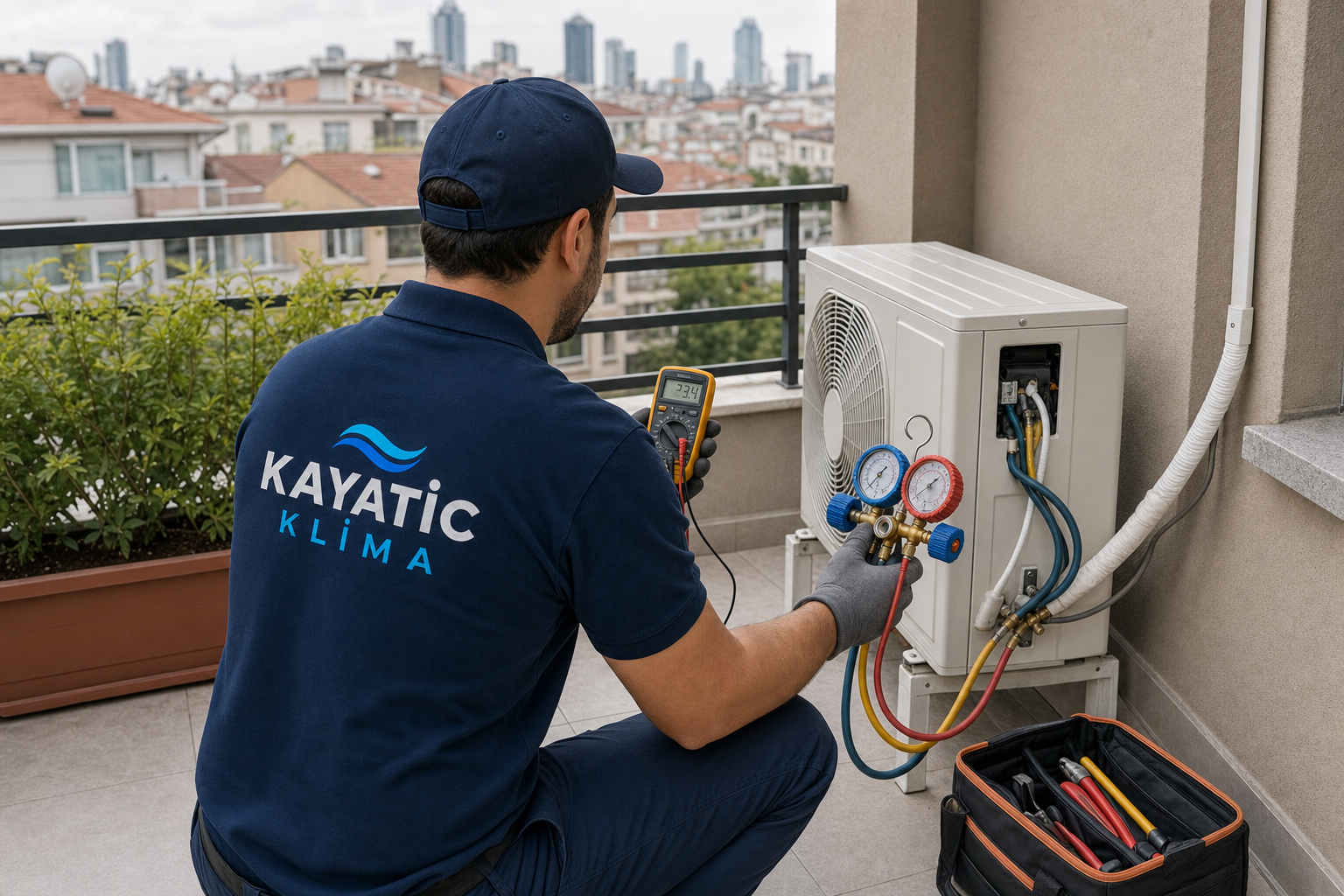
Obstructed airflow or a fan that does not operate can affect performance. Do not attempt user maintenance on roofs, façades or other unsafe outdoor-unit locations.
Record the fault code and model numbers
Share the display code, indoor and outdoor model numbers, when the symptom began and a safe photo if available. A definitive diagnosis usually requires on-site measurements.